
Crawl Space Radon: Sealing the Open Door
A slab at least slows soil gas down. A bare dirt or gravel crawl space doesn't — it's direct exchange between the ground and your living room air. Older Joliet and Lockport homes, and additions on newer ones, need a crawl-specific fix: a sealed membrane with suction underneath.
Why crawls are the worst offender
Radon moves with soil gas, and soil gas moves toward lower pressure — which is to say, into your house, especially in winter when the furnace stack effect pulls hardest. Under a slab, that flow squeezes through cracks and joints. Over exposed earth, there's nothing to squeeze through: the entire crawl floor breathes into the house through every gap in the subfloor above it. Homes with a dirt crawl regularly test multiples higher than their slab-only neighbors, along with the moisture and musty-air problems that ride the same pathway.
Where we see them around Joliet
Three patterns dominate. First, the pre-war housing: Joliet's East Side and Upper Bluff historic districts and Lockport's canal-era core — a town platted in 1837 as the I&M Canal headquarters — are full of limestone-foundation homes where a partial basement meets a shallow crawl under the rest of the footprint. Second, mid-century ranches where a crawl was simply cheaper than digging a full basement. Third — the one that surprises people — additions and bump-outs on newer homes: a 1990s Plainfield family room built over a crawl can undo an otherwise clean radon profile.
The fix: sub-membrane depressurization
The crawl gets lined with a heavy polyethylene membrane, sealed at every seam, pier, and foundation edge — think of it as installing the slab the house never had, in fabric form. Perforated collection pipe goes under the membrane, ties into the mitigation riser, and the system fan pulls soil gas from beneath the liner before it can touch your air. When the house also has a basement, the crawl run usually joins the same fan and stack as the sub-slab system, so you're maintaining one system, not two.
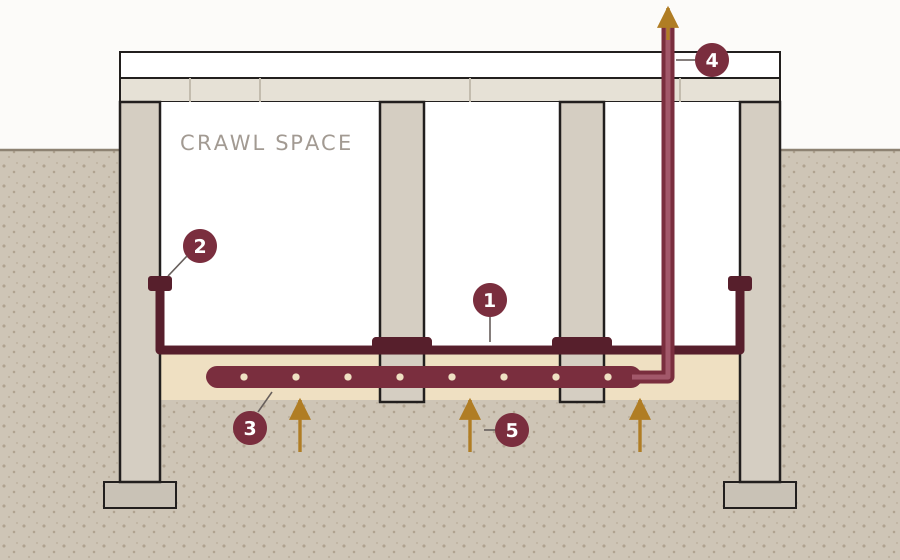
- The membrane. Heavy polyethylene laid over the bare earth and sealed at every seam — effectively the slab the house never had, in fabric form.
- Sealed edges. The liner runs up the foundation wall and wraps each pier, sealed at the top. The edges are where a cheap crawl job fails.
- Perforated collection pipe. Run beneath the liner so the fan pulls across the whole crawl floor instead of one spot.
- One system, not two. When the house also has a basement, the crawl run ties into the same riser, fan, and stack as the sub-slab system — one fan to maintain, one exhaust.
- Gas captured before it reaches your air. Soil gas collects in the space under the liner and leaves through the pipe, rather than breathing up through every gap in the subfloor.
What it does to the quote
A membrane adds real labor and material, so a combination basement-plus-crawl job prices above the county's typical $1,200–$1,700 single-suction install — most land in the upper half of the range, with large or hard-to-access crawls pushing toward $2,000–$3,000. What you get back: verified radon reduction plus a dry, sealed crawl, which around here does double duty against humid summers and the freeze-thaw season. As with every licensed Illinois install, it ends tagged and tested.
House sitting over bare dirt? Get it priced.
Call (815) 348-6800Frequently asked questions
Does a crawl space need its own separate mitigation system?
Not usually. When a house has both a basement and a crawl space, we tie the crawl's collection pipe into the same fan and stack that runs the basement's sub-slab system — one continuous run pulling from both areas instead of two systems to install, permit, and maintain. The exception is a crawl that's structurally separate from the rest of the foundation, where a dedicated suction point makes more sense. Either way, the goal is one set of results covering the whole house, not a patchwork.
My basement already tested clean — does a crawl space addition still need attention?
Yes, and it catches people off guard. A dirt or gravel crawl is an open floor to the soil, so it can pull in far more soil gas than the poured slab next to it, even in the same house. We regularly see this in additions and bump-outs on older Joliet-area homes — a family room built over a crawl can push a house's number up even though the original basement tests clean. If your home has any crawl space, don't assume the main-house result covers it — test that area specifically.
Is a musty or damp crawl space automatically a radon problem?
No — the two are separate issues that just happen to travel the same route. Radon has no smell, color, or taste at any concentration that matters, so a musty odor is telling you about moisture and mold, not radon gas. That said, dirt and gravel crawls are prone to both problems for the same reason: an open, unsealed floor lets soil moisture and soil gas into the house together. A damp crawl is a good reason to test, but the only way to know your actual number is a test, not your nose.
How is a crawl space radon system inspected or maintained afterward?
The same way a basement system is. Once installed, it runs continuously, and a simple pressure gauge on the pipe shows at a glance whether suction is still active — no guesswork needed between checks. As with any licensed Illinois mitigation work, the crawl system carries an installer tag and a post-installation test documenting the result, so there's a paper trail if you ever sell the house. Because the crawl run usually shares a fan and stack with the rest of the system, one check covers both.
Describe your crawl space
Dirt or gravel? Full-footprint or partial? Any standing-water history? Whatever you know helps the quote land firm.